
Permits and Placement: Guidelines for Temporary Restrooms on Roseville Properties and Streets
Learn the essential rules for placing portable restrooms on private properties and public streets in Roseville, CA, including permit needs, ADA standards, and site logistics.
Navigating Temporary Restroom Regulations in Roseville
Whether you are managing a custom home build in West Roseville, remodeling a commercial space along Douglas Boulevard, or organizing an outdoor gathering at a local park or private venue, managing on-site sanitation is a critical operational step. While ordering portable sanitation may seem simple, determining where those units can legally and safely sit requires thoughtful planning.
The City of Roseville maintains standards designed to protect public safety, pedestrian pathways, storm water systems, and neighborhood aesthetics. Understanding the difference between placing a unit on private land versus the public right-of-way will save you time, prevent unexpected fines, and ensure your site runs smoothly from delivery through pickup.
Private Property vs. Public Right-of-Way
The primary factor determining whether you need an official city permit is the physical boundary of the placement area. Portable restrooms placed on private property follow different guidelines than units placed on public streets or sidewalks.
Placement on Private Property
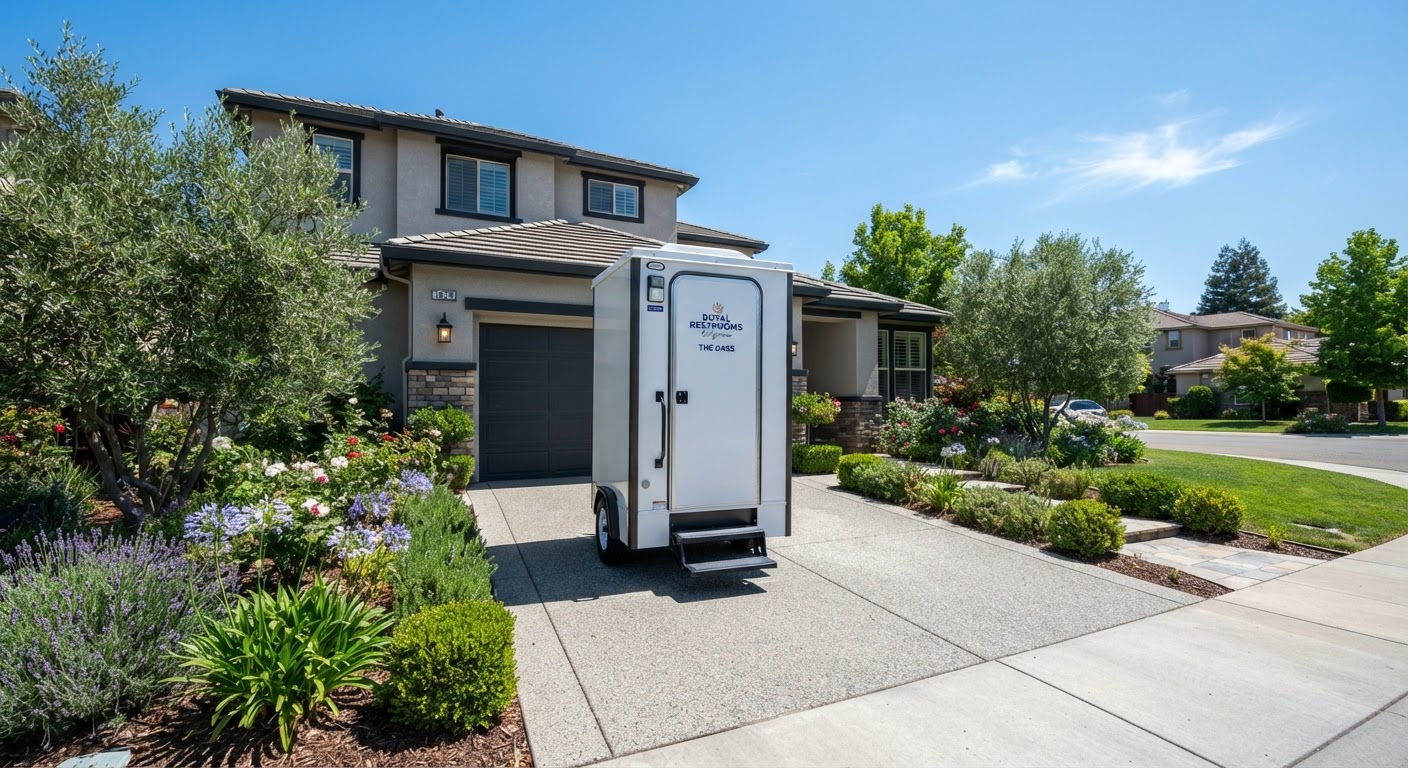
In most residential and commercial situations, temporary restrooms positioned entirely on private property do not require an encroachment permit from the City of Roseville. Examples include:
- Active residential driveways during a home remodel or roofing project.
- Enclosed commercial construction yards or graded building pads.
- Private backyards or event venues during weddings, festivals, or fundraisers.
- Parking lots of commercial retail centers (with property owner authorization).
Even on private property, local zoning rules, active building permits, and Homeowners Association (HOA) covenants may dictate how long a unit can remain visible from the street. In neighborhoods throughout areas like Sun City, Highland Reserve, or Crocker Ranch, checking your specific CC&Rs before scheduling a drop-off is always a recommended precaution.
Placement on Public Streets and Sidewalks
If your property lacks sufficient driveway space or off-street access, you might consider placing a portable restroom on the street curb or parkway. In Roseville, placing any temporary equipment, dumpster, or sanitation facility within the public right-of-way requires official authorization.
The City of Roseville Public Works Department oversees right-of-way permits, commonly referred to as Encroachment Permits. Placing a portable toilet on a public roadway without permission can lead to citations, forced removal fees, or stop-work orders on an associated job site. An encroachment permit ensures that the unit does not:
- Obstruct motorists' sightlines at intersections or driveways.
- Block access to city utility valves, fire hydrants, or maintenance manholes.
- Impede the flow of curbside storm water into municipal drainage basins.
- Block designated bicycle lanes or pedestrian paths.
Key Site Selection and Accessibility Factors
Once you determine the legal jurisdiction of your site, the physical characteristics of the ground dictate safe placement. A portable restroom that is poorly positioned can tip, become inaccessible to service vehicles, or fail accessibility audits.
Surface Stability and Level Ground
Portable toilets and luxury restroom trailers require firm, level ground. Concrete pads, asphalt driveways, and tightly packed gravel are ideal surfaces. Placing units on soft soil, loose sand, or steep inclines increases the risk of tipping, particularly when doors swing open during high wind events common to Placer County during seasonal transitions.
Service Truck Access
A standard single-stall portable toilet weighs between 150 and 250 pounds empty, but becomes significantly heavier once in use. Service trucks utilize specialized vacuum hoses to pump waste tanks, clean interior surfaces, and refill chemical deodorizers and water reservoirs. Most service hoses range from 25 to 40 feet in practical operating length. When selecting a site, ensure the service vehicle has an unobstructed, legal parking spot within direct reach of the unit.
Environmental and Storm Water Considerations
Roseville places a high priority on keeping local watersheds, including Dry Creek and Pleasant Grove Creek, free from runoff contaminants. When placing portable sanitation on an active project site, never place units directly over or adjacent to storm drain inlets. In the unlikely event of heavy rains or incidental spillage during severe storms, maintaining a reasonable buffer protects local waterways and prevents violations of local storm water quality ordinances.
ADA Compliance for Public Events and Workplaces
Accessibility is not merely a courtesy; it is often a legal requirement governed by the Americans with Disabilities Act (ADA) and California Title 24 standards.
When Are ADA-Compliant Restrooms Required?
If your temporary restroom setup serves the public—such as a community festival, outdoor concert, farmer's market, or charity run—you must provide accessible sanitation. Under general ADA guidelines, at least five percent of the total units provided at a single location must be ADA-accessible, with a minimum of one compliant unit per cluster.
For construction sites governed by OSHA and state occupational safety standards, accessible units may also be required depending on workforce accommodations and project scope.
Requirements for ADA Placement
Simply ordering an ADA-compliant unit is not enough; the placement site must also support accessibility:
- Continuous Accessible Path: The path from the main event area or work zone to the restroom must be stable, firm, slip-resistant, and free of steps or deep gravel.
- Ramp Incline: Any transition from ground level to unit threshold must meet slope guidelines so wheelchair users can enter independently.
- Interior Clearance: The unit itself must feature a flat floor, magnetic or latching closures operable with one hand, interior grab bars, and a 60-inch minimum turning radius inside.
Neighborhood Etiquette in Residential Communities
When renting a portable restroom for a residential renovation or backyard event, being mindful of your neighbors helps maintain community relations:
- Visual Screening: Whenever feasible, position units behind a fence line, garage corner, or low landscaping to minimize direct sightlines from neighboring front porches.
- Setbacks from Property Lines: Avoid placing units directly along a shared fence line adjacent to a neighbor's patio or bedroom window.
- Door Orientation: Orient the restroom door away from prevailing winds and away from primary neighborhood walkways to maintain privacy and dignity for guests and workers.
Professional Logistics Make the Difference
Navigating municipal guidelines, street permits, and job site layouts does not have to complicate your project timeline. Working with an experienced portable sanitation partner ensures you receive prompt advice on unit counts, optimal drop points, and reliable maintenance schedules that keep your project moving forward without interruption.
Whether you require standard construction units, ADA-accessible restrooms, or upscale restroom trailers for an upcoming event, Comfort First Porta Potty provides clean, compliant, and dependable sanitation solutions throughout Roseville. Contact our team today to discuss your site plan, reserve your equipment, and schedule hassle-free delivery.
Need help from Comfort First Porta Potty?
Contact our team to discuss your service needs in Roseville and surrounding service areas.